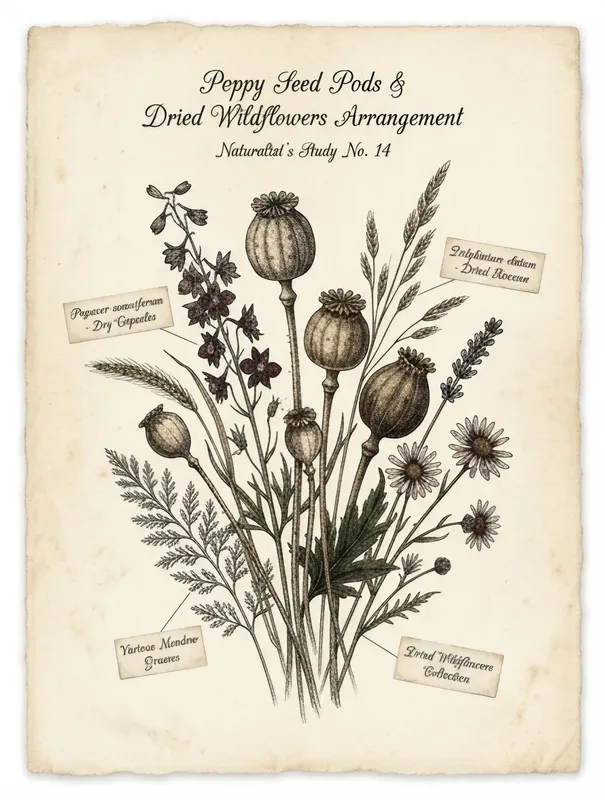
Poppy Seed Pods and Dried Wildflowers Arrangement Art Print, Victorian botanical illustration, study or library decor, gift for naturalists
Poppy seed pods and dried wildflowers form a Victorian naturalist arrangement, rendered with fine ink linework, handwritten specimen labels, and a sepia, deep green palette on aged cream paper. Printed on Enhanced Matte Paper (189 g/m²), this art print brings an antique curiosity cabinet feel to a study, library, or thoughtful gift for a botanical art enthusiast.
This print is for the naturalist who notices the structure of a seed pod, the curve of a stem, and the small differences between one dried flower and another. It suits a birthday, housewarming, graduation, or quiet thank-you for someone who keeps field guides on the shelf and pressed leaves between book pages. It also makes a considered gift for a botanist, gardener, collector, or reader who enjoys the atmosphere of an old study. Rather than presenting a bright floral bouquet, the arrangement focuses on the forms left behind after flowering: round poppy capsules, slender stalks, narrow leaves, and delicate wildflower heads gathered into a composed specimen display. The palette stays close to sepia, deep green, muted brown, and aged cream, giving the image the measured character of a page from a Victorian botanical reference book.
When the recipient unwraps it, they see fine ink lines describing each pod and flower with the precision of a naturalist’s study. The poppy seed pods provide the strongest shapes, their bulbous heads and ribbed surfaces set against thinner stems and branching sprays of dried wildflowers. Small handwritten labels sit near the specimens, adding the visual detail of a working collection rather than a decorative pattern. The cream ground has the look of an aged sheet, while the restrained colours keep the botanical forms easy to read from across a room. Up close, the linework draws attention to the texture of the pods, the pointed leaves, the uneven edges of the flowers, and the spacing between each element. It can be framed as a single focal piece above a desk or reading chair, or placed among maps, botanical books, framed leaves, and other pieces from the Botanical & Specimens series.
In a home, the print settles naturally into spaces built around reading, study, and collected objects. In a library, it can hang above a writing desk or beside a bookcase, where the sepia and cream tones connect with walnut, oak, leather, and dark green upholstery. In a study, it adds a quiet reference to the natural world without introducing the saturated colour of a conventional flower image. It also works in an entryway, bedroom, or creative workspace when paired with brass frames, stoneware vessels, dried grasses, or a small cabinet of curiosities. The fine labels and individual plant forms reward repeated viewing, so the arrangement can reveal more detail as someone spends time nearby. Its subdued botanical palette is easy to live with through changing seasons, working alongside winter branches, spring greenery, summer flowers, or autumn grasses. Over time, it reads less as a temporary floral accent and more as a personal specimen plate: a grounded piece for someone who wants their walls to reflect curiosity, observation, and an affection for the natural forms found outdoors.
“A muted botanical study that lends quiet, scholarly romance to walls without overwhelming the room.”
- SubjectDried poppy seed pods and wildflowers rendered in delicate, observational detail.
- Palette & lightMuted earth tones, soft sepia undertones, and gently fading petals evoke aged paper.
- CompositionBotanical specimen arrangement with airy negative space, centered on an off-white ground.
- Where it fitsReading corner, home office, or study of readers drawn to vintage natural history prints.
| Suited to | reading nook, office |
| Material | Enhanced Matte Paper (189 g/m²) |
| Digital printing | |
| Care | Frame or mount out of direct sunlight; wipe gently with a dry, soft cloth. |
| Shipping | Made to order — ships in 2–5 business days |